
Search Kenosha DUI Records
Kenosha DUI Records are usually traced in two parts: the city-side police records and the county-side circuit court file. If you only need to confirm that a case exists, WCCA is the fastest first stop. If you need the arrest report, you usually work through Kenosha Joint Services Records Department. If you need the court file or a certified copy, the Kenosha County Clerk of Courts is the office that keeps it. This page brings those paths together so you can move from a city search to the county record without guessing which office owns which document.
Where Kenosha DUI Records Start
City DUI searches often start with the police report. Kenosha Police Department records requests go through the Kenosha Joint Services Records Department. The request form is available through the city records portal, and the department says requests can be made by mail, email, or fax. The department is located at 1000 55th Street, Kenosha, WI 53140, and records can be mailed or picked up at the Public Safety Building's Information Counter. The response time is about 10 working days. That is the right path when you need the stop, the arrest, or the report number behind a city case.
The county court file is different. The Kenosha County Clerk of Courts can be reached at (262) 653-2664, and the office provides family court forms and small claims collections procedures, with court fees payable online. County records are maintained for civil, criminal, family, traffic, and ordinance cases. That means a city arrest can produce a police record and a county court record that do not live in the same office. The trick is to know which one you need before you request copies.
The city police record request form asks for the requester's name, address, phone, and email. It also asks for the violation, date of offense, citation number, and or case number, and for recorded hearings it asks for the hearing date. If a request is denied, Wis. Stat. § 19.37(1) allows the requestor to pursue mandamus relief. That gives the city request path a clear public-records framework instead of a vague inbox.
The manifest city image row was failed, so this page uses the county law library image as the local Kenosha fallback instead.
How to Search Kenosha DUI Records
The first statewide search tool is Wisconsin Circuit Court Access. WCCA gives free public access to case summaries, docket entries, and party details for Kenosha County circuit court matters. Kenosha is the fourth most populous county in Wisconsin, so WCCA is especially helpful when you want to confirm a case number before you call the clerk. It includes criminal OWI cases, civil litigation, family court proceedings, and traffic violations. You can search by name or case number and quickly see whether the case is open, closed, or still moving through the court.
WCCA is a docket system, not a full document archive. It shows the case history, but not the full filings. If you need the complaint or a certified copy, the clerk of courts keeps the official file. Cases filed after the CCAP rollout usually have fuller electronic detail, while older cases may be limited. The practical search sequence is simple. Check WCCA first, then use the clerk office for the file itself.
The manifest includes the state WCCA image tied to Wisconsin Circuit Court Access. That image fits the start of the search path.
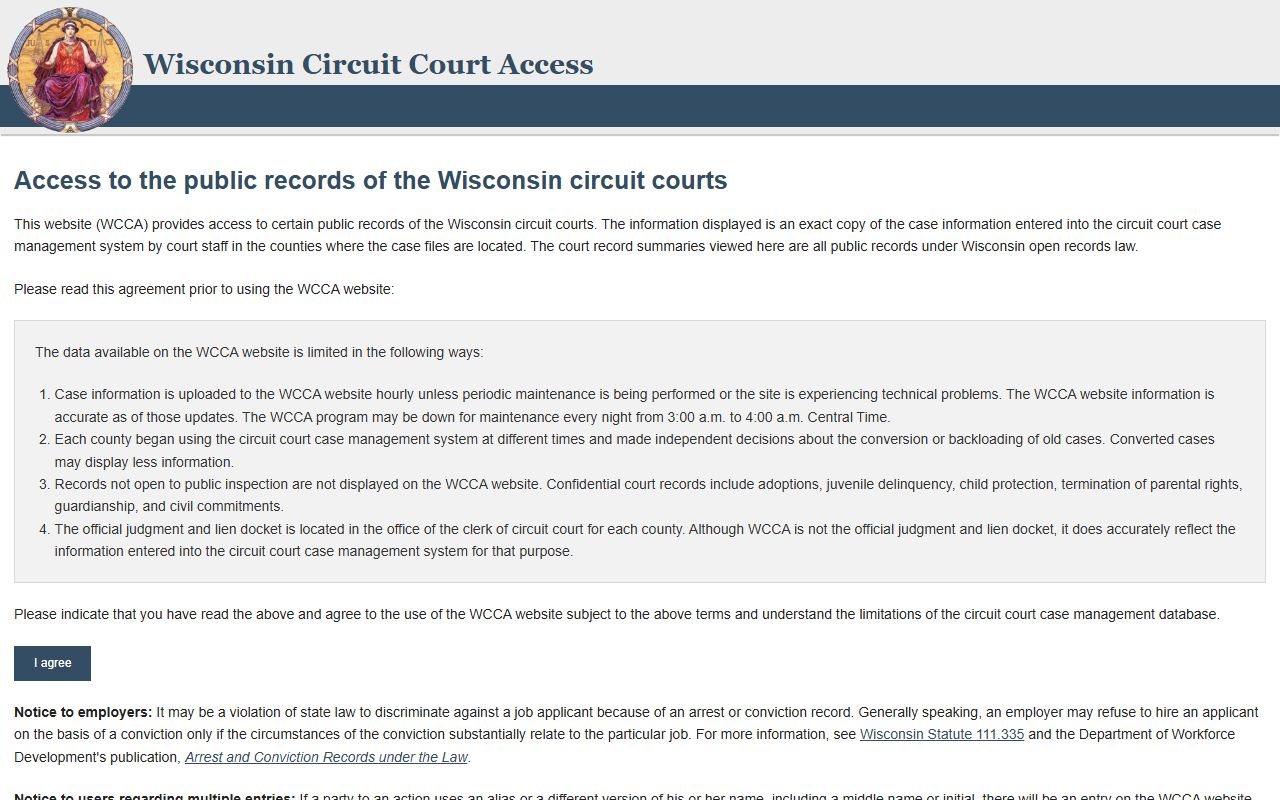
Use the docket to identify the case, then move to the clerk when you need the paper record or a certified copy.
The city police report path is narrower than the court path, but it is still useful when the DUI question begins with a traffic stop, a field arrest, or a report number. The city records department can help you identify whether the report exists before you ask the county clerk for the court file.
Kenosha Police Records and Court File
The city records request flow is practical. Kenosha Joint Services asks requesters to send the report request by mail, email, or fax, and it says the file can be mailed or picked up after processing. That makes it the main city-side route for a police report tied to a DUI stop. If the issue is a hearing recording or a municipal matter, the city records form is the right tool to use. The form requires enough detail to find the event, which is why the date, citation number, and case number matter so much.
The county court file is where the DUI case itself lives. The Wisconsin State Law Library Kenosha County Resources page is the cleanest county-side reference for the clerk of courts. The Kenosha County Clerk of Courts handles civil, criminal, family, traffic, and ordinance records, and the office can answer questions about copies, case status, and payment. It also provides jury information and handles online fee payment. The county law library image in the manifest matches that resource.
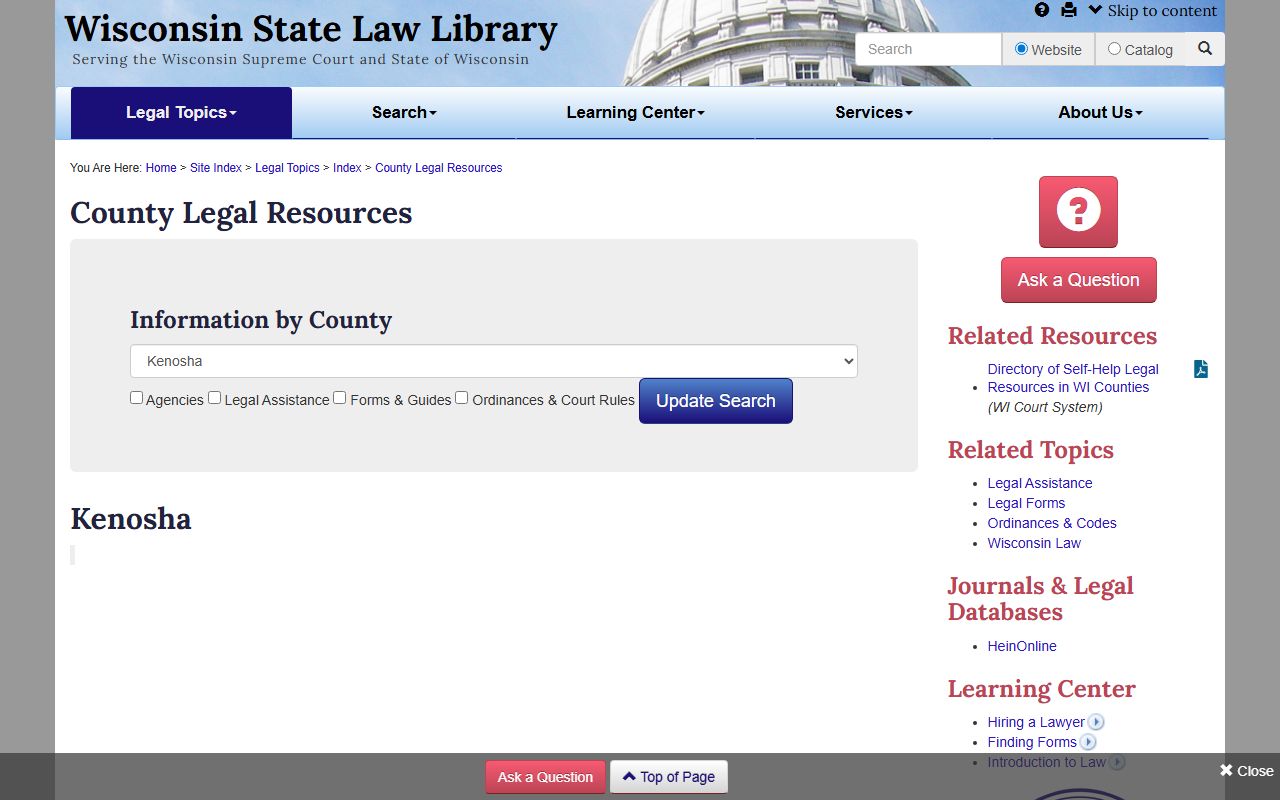
That county resource is the local bridge from a WCCA search to the office that can issue the actual file or certify a copy.
The Kenosha County Sheriff's Department can be reached at (262) 605-5100. The office provides county law enforcement and jail operations, serves legal documents, and handles sheriff sales and warrant information. That matters when a city stop led to a county arrest or when a warrant or custody question sits on top of the DUI search. The district attorney can be reached at (262) 653-2400 and prosecutes OWI cases, while victim and witness services are available through the same office. Those county contacts matter because they show where the case moved after the city report was made.
Kenosha DUI Records and Driver History
Wisconsin driving records contain the driver's license history, including traffic violations, suspensions, revocations, and OWI convictions. The DOT keeps the record for at least five years, and OWI convictions remain on the record for life, with a minimum retention period of 55 years. The DOT charges $5 per record when you request it online or by mail. Third-party requesters need the driver's written consent on the MV2896 form. That is why the court file and the driving record are separate requests, even when they come from the same Kenosha case.
The manifest includes the WisDOT driving-record request image tied to WisDOT driving record requests. That matters because the court file and the driver history are separate records, even when they come from the same DUI event.
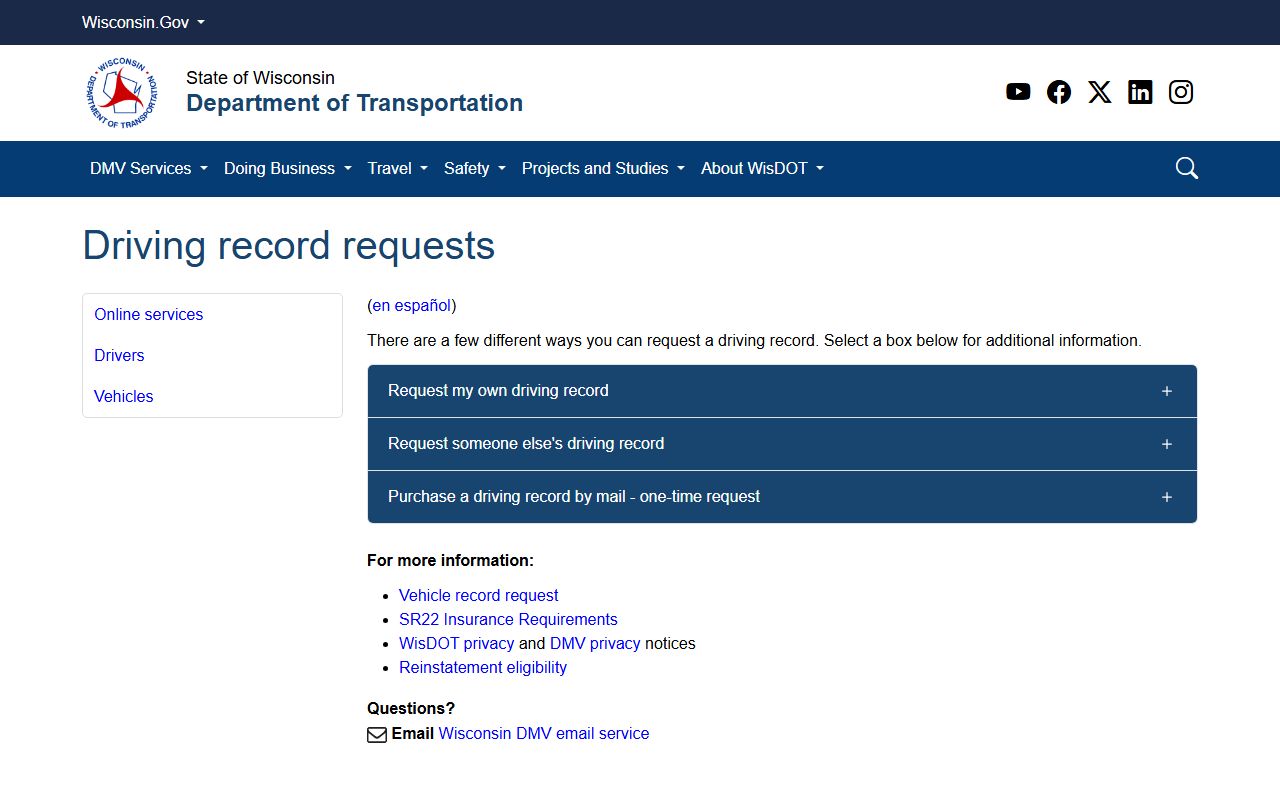
Use the clerk for the court copy and WisDOT for the driver record. The two systems answer different questions.
If the case led to a license hold or refusal issue, the DOT's OWI page explains the suspension side of the record. That is where revocation length, occupational license rules, and SR22 requirements are described in one place.
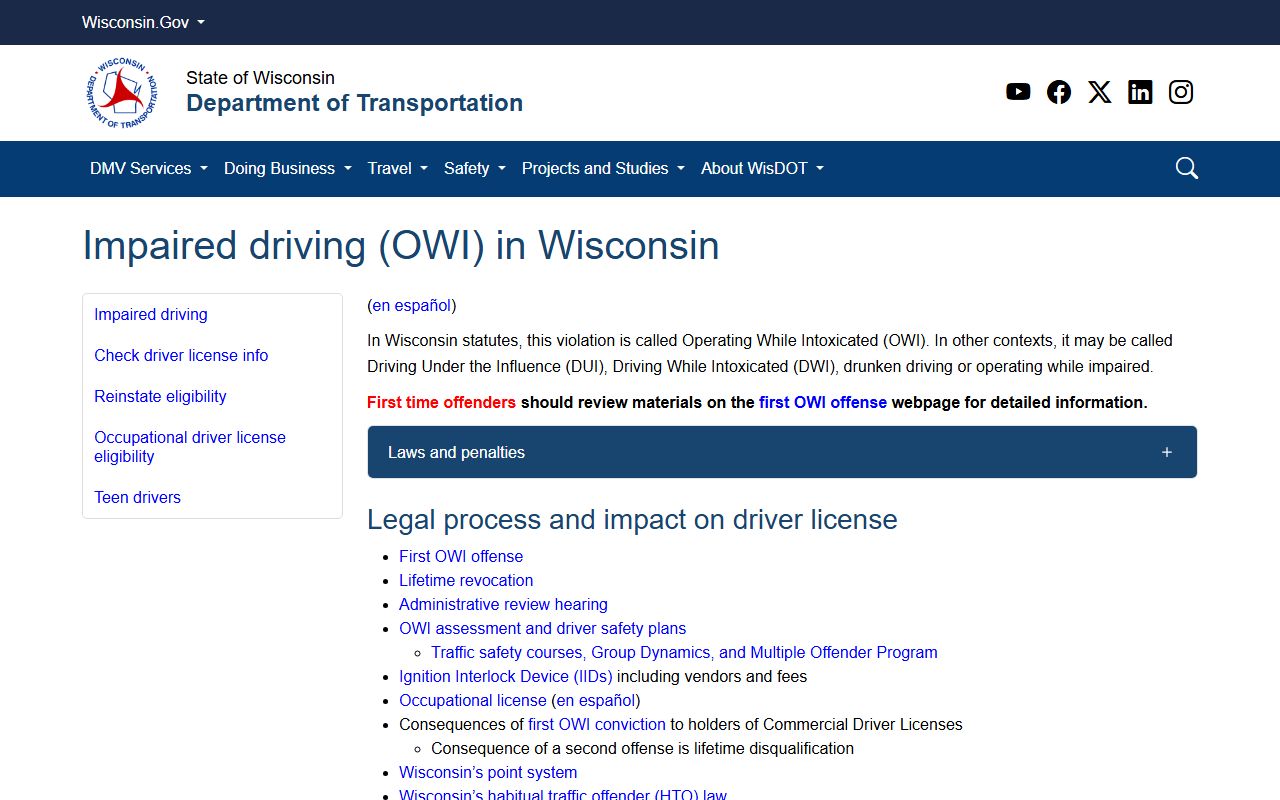
That page is the right companion when the county docket ends and the license question begins.
The manifest also includes the state law library drunk-driving resource tied to Wisconsin State Law Library Drunk Driving. That page is a better place to read the law once you know the case exists. For legal context, Wisconsin's OWI law is set out in Wis. Stat. § 346.63, and refusal consequences are tied to Wis. Stat. § 343.305. Those links are the legal frame for the city report and the county record that follows it.
If you need more general public-records background, Wis. Stat. § 19.37(1) is the mandamus provision that comes up when an agency denies a proper request. It is not a substitute for the report or the court file, but it explains the enforcement route for a denied records request.