
Search Oshkosh DUI Records
Oshkosh DUI Records usually start in two places. City police records tell you what happened at the stop, and Winnebago County court records tell you what happened in court. If you only need to confirm a case, WCCA is the fastest first step. If you need a police report, the City of Oshkosh Police Department handles those requests. If you need the court file or a certified copy, the Winnebago County Clerk of Courts is the office that keeps it. This page keeps those paths together so you can move from a city report to the county file without guessing.
Oshkosh City Records and Court File
The City Clerk's Office in Oshkosh maintains custody of city official records, including council minutes, ordinances, resolutions, contracts, agreements, licenses, annexations, and oaths of office. The office is on the first floor of City Hall, room 108, and the city says it can certify official documents. That matters for city records requests, but not for the DUI court file itself. A DUI case in Oshkosh usually becomes a county court matter, while the city keeps the local government records and police records in a separate track.
The City of Oshkosh Police Department has its own records path. The city records page says police department records are submitted directly through the police public records portal, while city records that are not police records go through the city clerk. That split is important. A city request for an arrest report or crash report is not the same as the county court file. If you start with the wrong office, you lose time.
The city attorney page also explains a smaller but useful piece of the local record path. Oshkosh ordinance violation prosecution includes non-criminal traffic tickets and forfeitures issued by the police department or by inspection, planning, and fire staff. City citations are generally scheduled for Wednesday mornings with the Winnebago County Court Commissioner. That is not the same as a county OWI case, but it shows how local citations and county court scheduling fit together in Oshkosh.
The city manifest image row was a weak third-party source, so this page uses state fallback images instead of that local asset.
How Oshkosh DUI Searches Work
The first statewide search tool is Wisconsin Circuit Court Access. WCCA gives free public access to case summaries, docket entries, and party details for Winnebago County circuit court matters. It includes criminal OWI cases, civil matters, family court proceedings, and traffic violations. You can search by name or case number and quickly see whether the case is open, closed, or still moving through the court. That is usually enough to confirm whether an Oshkosh DUI record exists before you call the clerk.
WCCA is a docket system, not a full document archive. It shows the case history, but not the full filings. If you need the complaint or a certified copy, the Winnebago County Clerk of Courts keeps the official file. The county clerk page is the safer local follow-up when the city report gives you one number and the county file uses another. Cases filed after the CCAP rollout usually have fuller electronic detail, while older cases may still require direct clerk contact.
The state WCCA image tied to Wisconsin Circuit Court Access is the best first visual anchor for the search path.
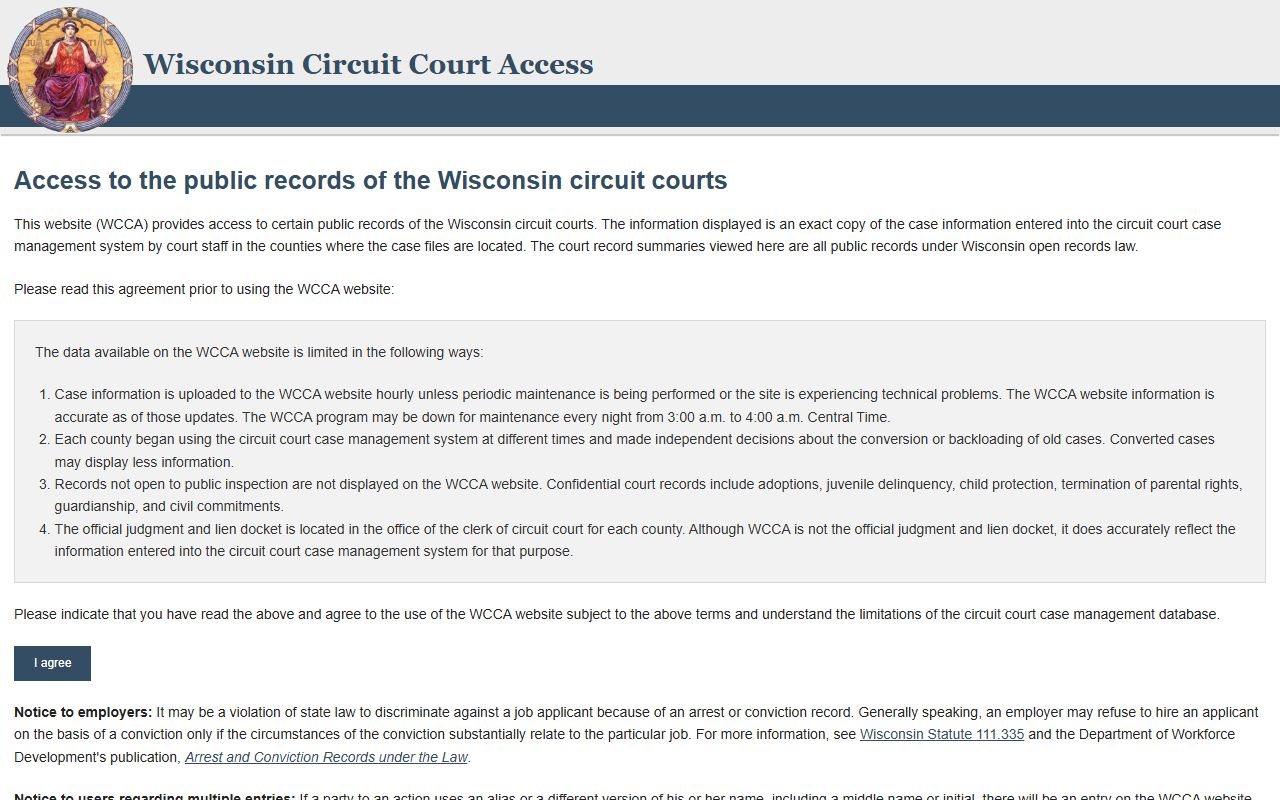
Use the docket to identify the case, then move to the clerk when you need the paper record or a certified copy.
The eCourts portal image tied to Wisconsin Court System eCourts helps when the search turns into a forms question or a filing question.
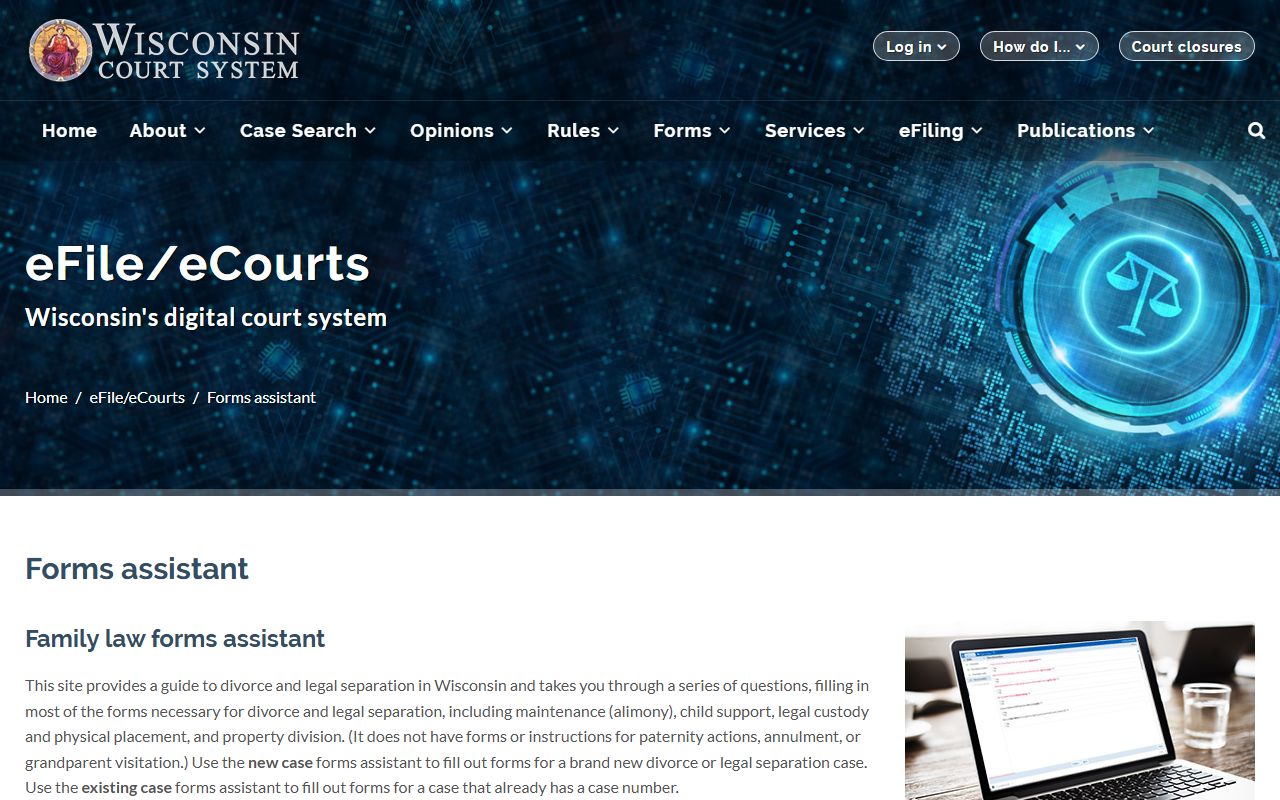
For self-represented users, eCourts is the bridge between the public docket and the paperwork that follows.
Oshkosh Police Records and County Filings
The City of Oshkosh Police Department is the place to start when you need the report behind a traffic stop, arrest, or crash. The city records page says police requests go through the Police Department and can be submitted in the portal, by mail, by phone, by fax, email, or in person, with the request then entered for processing. The police department page gives the office location at 215 Church Avenue, the phone number, and the office hours. That is a direct city records route, separate from the county court file.
The police department contact form and records pages make the city split very clear. The city clerk handles city official records, but police records are handled separately. For an Oshkosh DUI search, that means a police report may live in one office while the court file lives in Winnebago County. If the city report references a citation or crash, that detail can help you find the county docket faster.
The Winnebago County Clerk of Courts is the county office that keeps the court record. The county law-library page says the clerk handles court forms and records and offers access to criminal, traffic, family, small claims, civil, juvenile, and paternity matters. The county clerk of courts portal offers searches by case number, party name, and citation number. Those are the records tools you use when the city report has already been requested and the next step is the court file.
For local context, the Winnebago County Sheriff's Office Records Division can be reached in Oshkosh, and the state law-library county page also points to sheriff and drug court resources. That helps when the case includes a booking, a warrant, or treatment court involvement.
The city of Oshkosh police records page is also where you would look for the city side of an incident report or crash report, which can help you match a stop to the county case file later.
Oshkosh DUI Records and Driver History
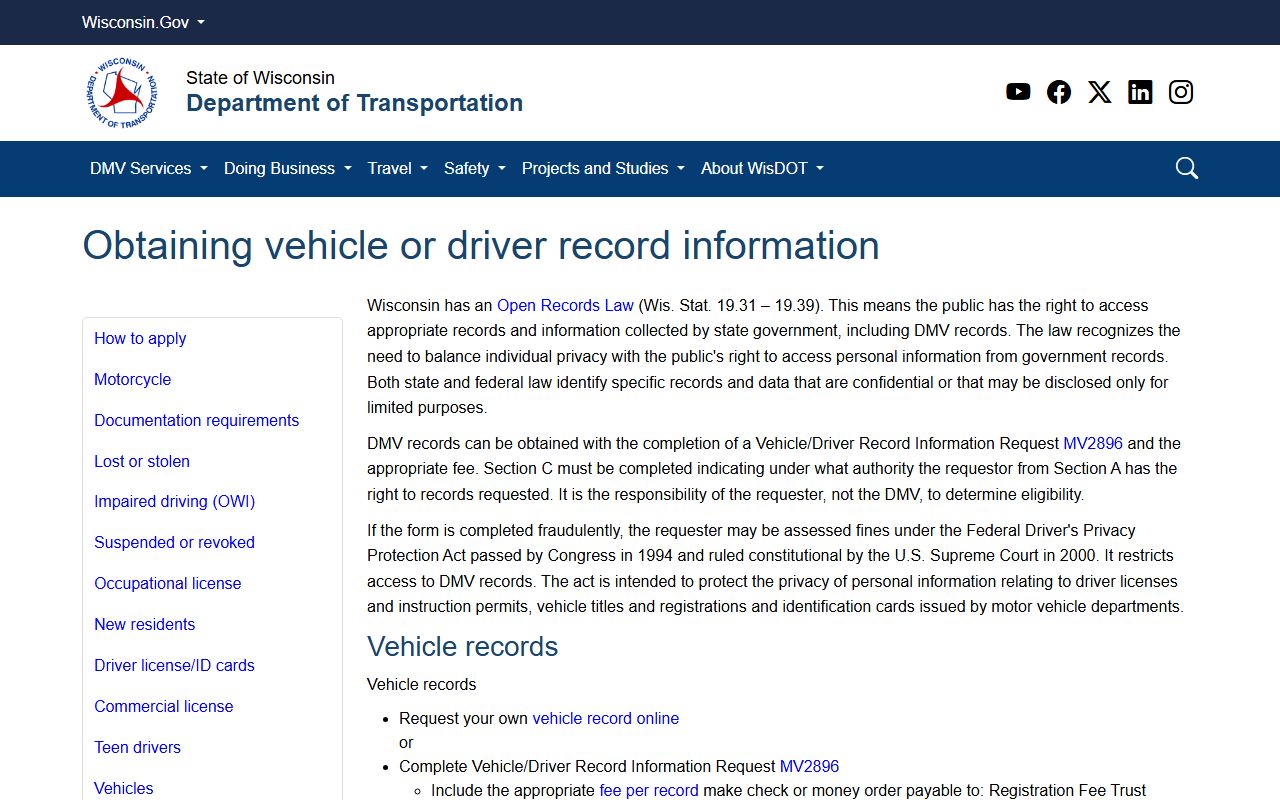
Wisconsin driving records contain the driver's license history, including traffic violations, suspensions, revocations, and OWI convictions. The DOT keeps the record for at least five years, and OWI convictions remain on the record for life, with a minimum retention period of 55 years. The DOT charges $5 per record when you request it online or by mail. Third-party requesters need the driver's written consent on the MV2896 form. That is why the city report and the county court file are separate from the driving record. They answer different questions.
The manifest uses the WisDOT driving-record request image tied to WisDOT driving record requests. That matters because the court file and the driver history are separate records, even when they come from the same DUI event.
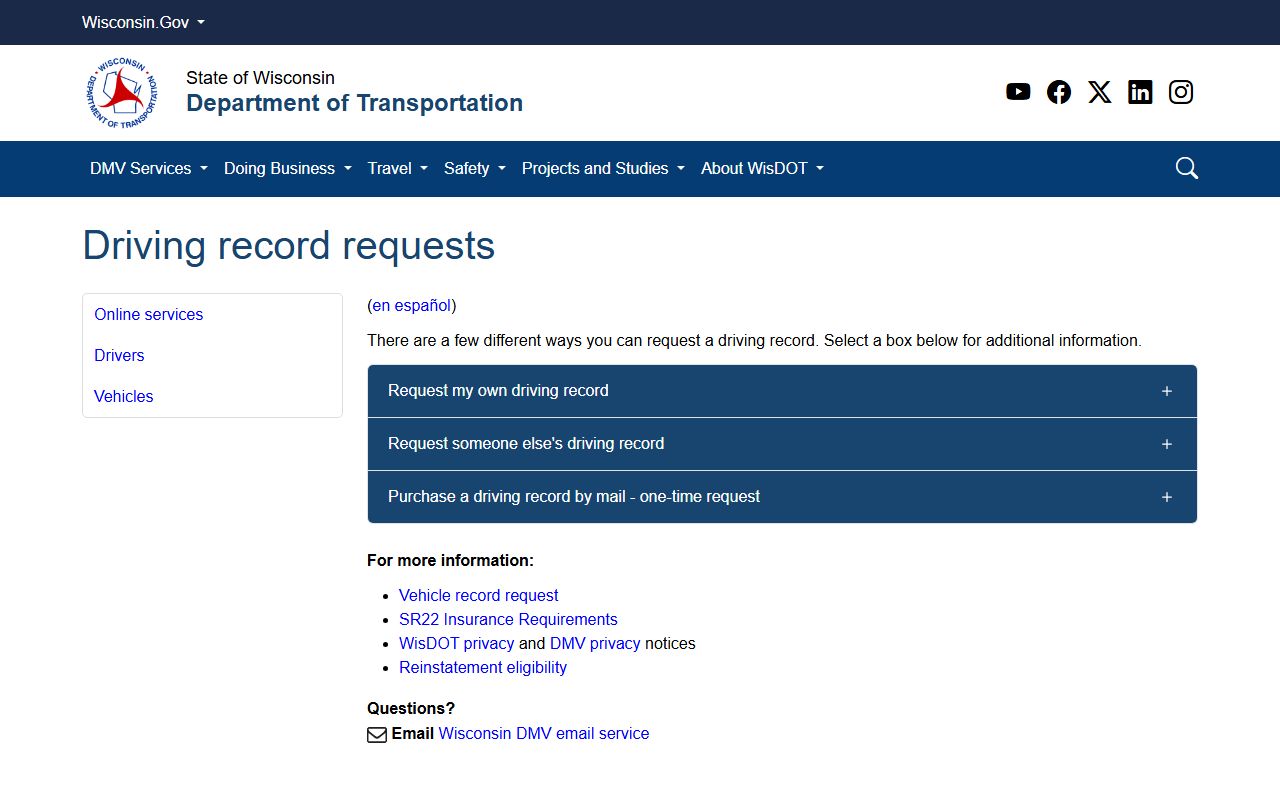
Use the clerk for the court copy and WisDOT for the driver record. The two systems answer different questions.
If the case led to a license hold or refusal issue, the DOT's OWI page explains the suspension side of the record. That is where revocation length, occupational license rules, and SR22 requirements are described in one place.
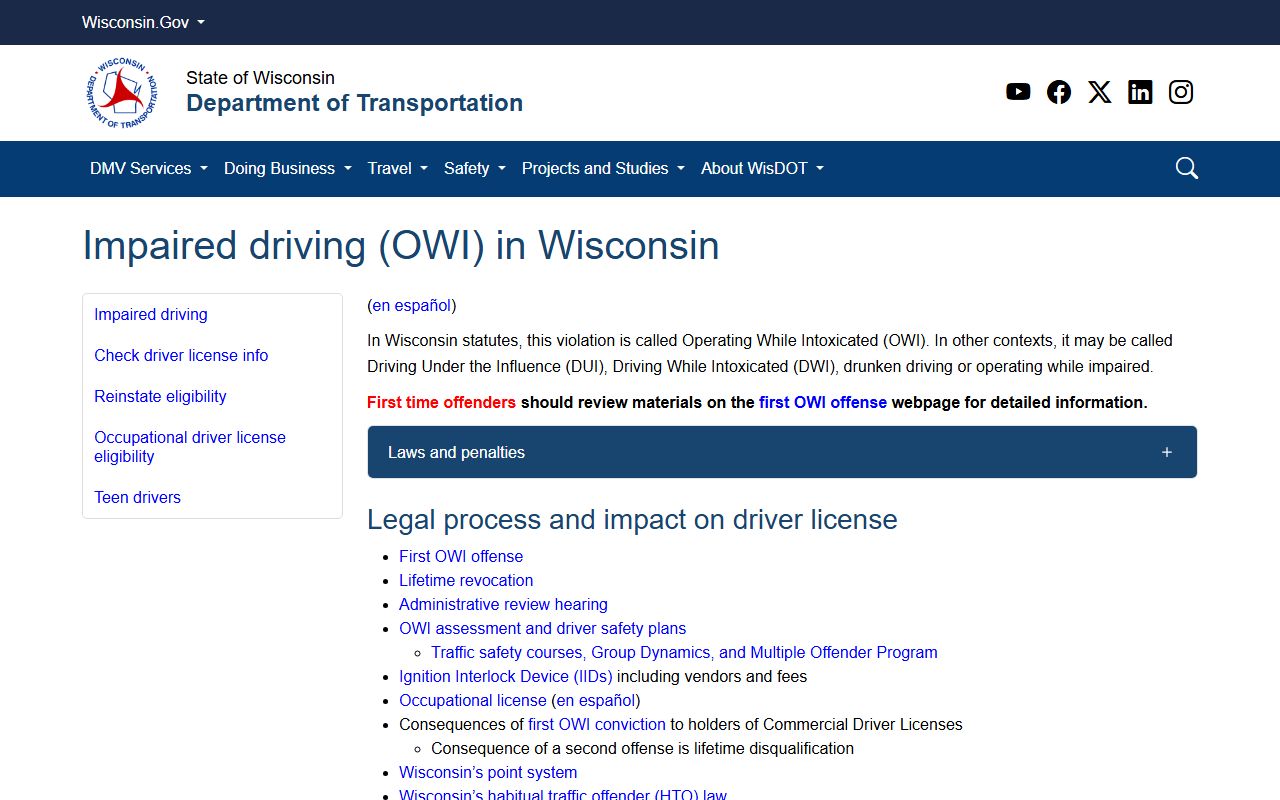
That page is the right companion when the county docket ends and the license question begins.
The manifest also uses the state law library drunk-driving resource tied to Wisconsin State Law Library Drunk Driving. That page is useful when you want the legal frame around an OWI stop, a citation, or a hearing. For the statutes themselves, Wisconsin's OWI law is set out in Wis. Stat. § 346.63, and refusal consequences are tied to Wis. Stat. § 343.305.
The state crash records system is another useful follow-up when a city stop involved a collision. You can use the crash report as a separate record path without confusing it with the court case or the police report.
That record can help connect the traffic stop, the police report, and the county court file.
The state law-library county page for Winnebago also points to the county sheriff and drug court, which helps if the Oshkosh case includes a booking issue, a warrant, or a treatment court path after the arrest.