
Find Ashland County DUI Records
Ashland County DUI Records are split between the Clerk of Circuit Court, the Sheriff's Office, and the state systems that track court, license, and crash information. That means the fastest search starts with the record type you need. WCCA can confirm a case number or docket entry, while county offices handle copies, local reports, and written requests. If you are following an OWI stop from arrest to court to license action, it helps to keep each part separate and use the right office for each step.
Ashland County Overview
Ashland County Clerk Office
The Ashland County Clerk of Circuit Court keeps the official court file for OWI and other criminal traffic cases. The office is at 201 Main Street West, Room 307, in Ashland, and it handles the records that are not visible in full on WCCA. The clerk can be reached at (715) 682-7016 during weekday business hours. If you need a certified copy, a docket printout, or the case history behind a local DUI matter, this is the office that holds the file. The clerk also accepts payments in person, by check, money order, cash, or credit card, which matters when you are trying to clear a fee before release.
Here is the county page for Ashland County Clerk of Circuit Court. The page lists the office phone number, explains the Allpaid credit-card process, and gives the Ashland County Pay Location Code. It also notes that online payment options are available through the Wisconsin Court System website. That matters because some record requests cannot move until the county has received payment or an accepted payment method.
The image below comes from the official Ashland County Clerk of Circuit Court page and helps anchor the local court-record source for Ashland County DUI Records.
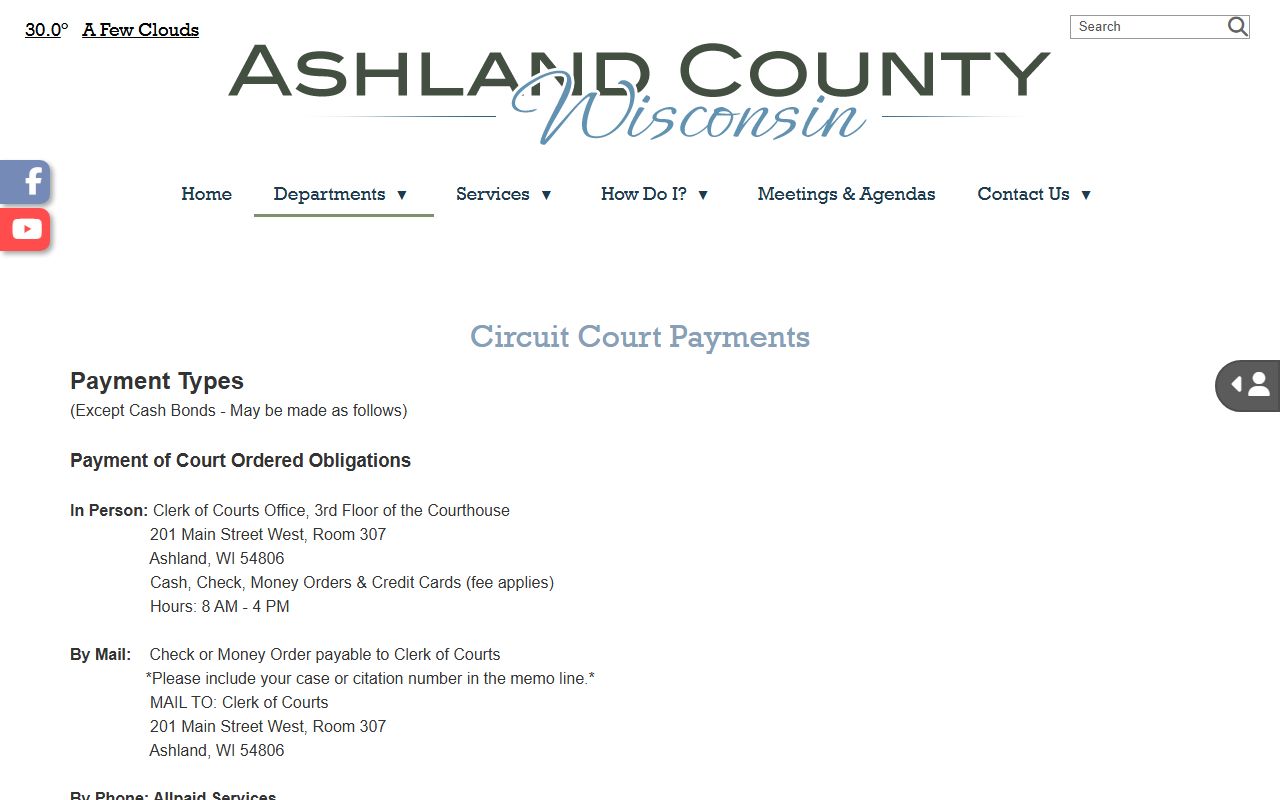
That county page is the one to use for phone, payment, and copy-request details when WCCA shows the case but you still need the file.
The clerk's office also receives written requests for copies. Standard copies are $1.25 per page, certified copies cost an additional $5.00 per document, and a $5.00 search fee applies when the case number is not provided. If you are mailing a request, include enough detail to identify the case and a self-addressed stamped envelope so the office can return the records without delay. That is especially useful when an old OWI file is being searched by name alone.
For a quick check of what is on file, the statewide Wisconsin Circuit Court Access portal is still the fastest first pass. WCCA shows party names, docket entries, and the basic case status, but the clerk keeps the underlying paper or electronic file. When you need the actual record, the county office is the final stop.
How To Search Ashland County DUI Records
Start with a WCCA name search if you are not sure which office has the record. The portal can find criminal traffic matters, including OWI cases, by party name or case number. It shows docket entries, hearing dates, and the basic charge information, which is enough to confirm whether the record belongs to the right person. From there, you can decide whether you need a court copy, a sheriff report, or both. If the case is still active, the docket also helps you avoid sending the wrong request to the wrong office.
- Full legal name and any known aliases
- Approximate arrest date or filing year
- Case number, citation number, or jail booking number if available
Local arrest reports and related records come from the Sheriff's Office. The county open-records page explains that requests can be made by e-mail, by mail, or during business hours. Incident reports, contact records, photos, audiotapes, and DVDs can be requested there, and that makes the office important when a DUI case starts with a traffic stop or a jail booking.
Here is the Ashland County Sheriff's Office open-records page: Ashland County Sheriff Open Records.
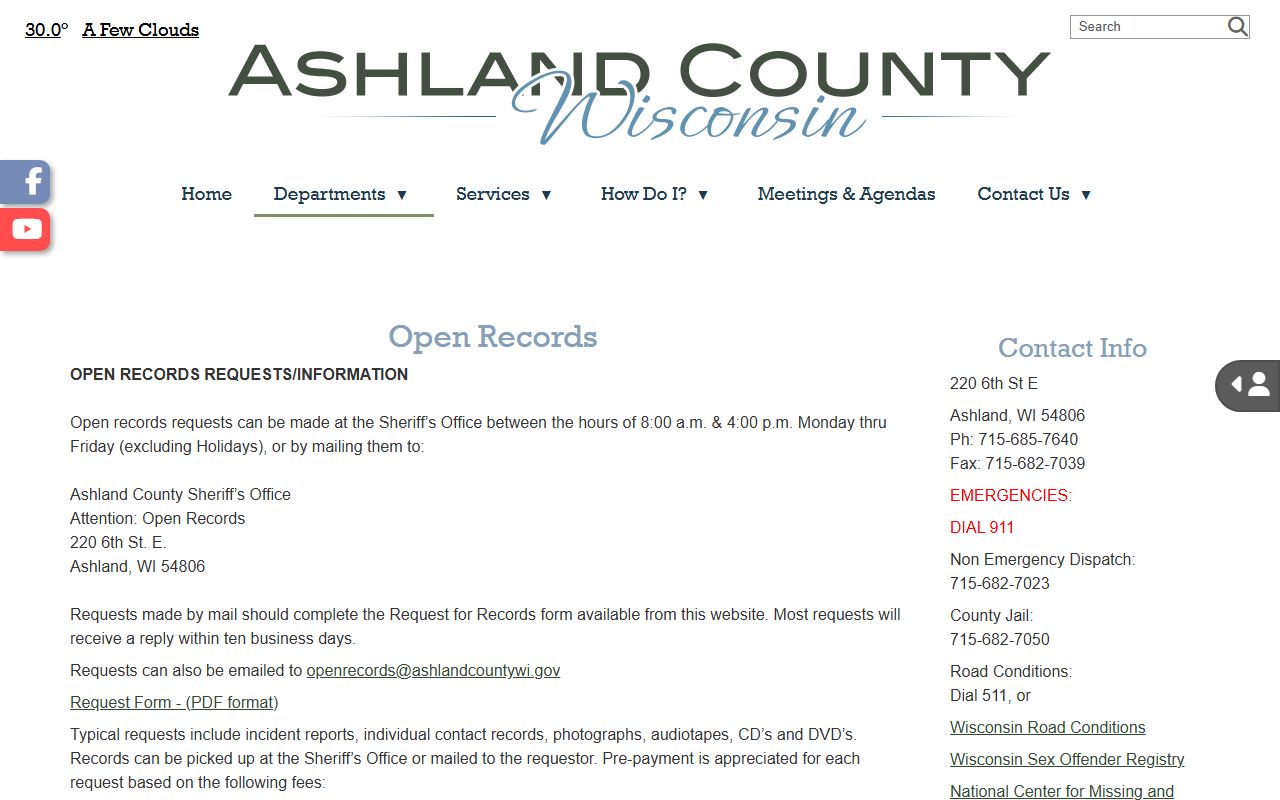
That office is the county source for incident reports, local arrest details, and booking records tied to an OWI stop. Requests are accepted from 8:00 AM to 4:00 PM Monday through Friday, and the county says e-mail requests can be sent to openrecords@ashlandcountywi.gov. Mail requests go to 220 6th St. E., Ashland, WI 54806.
Crash reports are different. They are not kept as sheriff open records, and they usually come through the Wisconsin Department of Transportation's Crash Records System. If you need statewide criminal history information instead of a local arrest report, the DOJ Crime Information Bureau is the official record-check site. Those two state systems answer separate questions, so it helps to know which one matches your goal before you pay for a request.
Ashland County DUI Records Fees
Ashland County uses the same basic copy structure as other Wisconsin counties. Standard copies are $1.25 per page, certified copies add $5.00 per document, and a search fee can apply when the clerk must locate the case without a number. The county also accepts payments by cash, check, money order, and credit card, though the credit card option includes a convenience fee through Allpaid. The county Pay Location Code is 1054, which is the number you need when you pay by phone.
If you need the written request form, the county provides a public records request form that can be mailed or e-mailed to the county. The form is useful when you want to list the exact record, cap your cost, or ask for an estimate before the office starts work. Ashland County's form also fits the usual public-records workflow: the county can ask for payment up front when the request is large, and it can redact confidential material before release.
For records that live with the state instead of the county, the Wisconsin DOT driving record request page is the place to order a license history. That record shows OWI suspensions and revocations that follow the driver, not just the case file. The DOT's OWI license suspension page explains how those revocations work and when an occupational license may be possible. Those costs and deadlines are separate from the county court file, so it is worth checking both sides of the record before you decide what to request.
Ashland County OWI Process
Wisconsin's OWI statute is Wis. Stat. § 346.63, and that is the law Ashland County prosecutors and judges use in DUI cases. The county circuit court handles the criminal side of the case, while the DOT handles the license side. That split matters when you are trying to trace what happened after an arrest, because the court file, the sheriff report, and the driver record all tell different parts of the story.
The court calendar is handled through the clerk's office, and the county uses the 10th Judicial District structure for scheduling. If you are following a case from charge to hearing, WCCA will show the docket sequence, while the clerk can confirm the record copy that matches the docket. For the people who want to read up before they request records, the Wisconsin State Law Library's Drunk Driving Resources page is the best statewide legal reference for OWI research.
One more useful county reference is the Ashland County directory on the Wisconsin State Law Library site. The county page lists the clerk, sheriff, district attorney, register in probate, register of deeds, family court commissioner, and other offices that touch county records. If you are not sure which office has the paper trail, that directory can point you in the right direction before you send a request.
Ashland County Records Help
Here is the county law library reference page for Ashland County.
That county directory points you to the main local offices, and it is useful when you need to confirm whether a DUI file, jail record, or other related record should be requested from the clerk, the sheriff, or a state office.
For Ashland County DUI Records research, the best habit is to keep the court file, the sheriff record, the public-records request form, and the DOT driving record separate. Once you do that, the case becomes easier to read and easier to request.