
Clark County DUI Records
Clark County DUI Records start with the circuit court, but the practical search usually begins on WCCA. From there, the clerk of courts can give you the local file, and the sheriff's office can help with arrest and incident records when you need the law-enforcement side of the case. The county courthouse in Neillsville keeps the main court offices close together, which makes the record trail easier to follow. If you are looking for a docket, a certified copy, or the local office that can answer the next question, this page points you to the official county sources.
Clark County Overview
Clark County Clerk of Courts
The Clark County Clerk of Courts is in the Clark County Courthouse at 517 Court Street, Room 405, Neillsville, WI 54456. The office phone is (715) 743-5181, and the office is open Monday through Friday from 8:00 AM to 4:30 PM. That office handles records management, financial management, jury management, and court forms for the circuit court. It is the main stop if you need a local DUI record that is more than a WCCA summary.
The clerk's office covers civil, criminal, traffic, family, small claims, and appeals. A Recovery Court program is also available for eligible defendants. Court staff can explain procedure, but they cannot give legal advice. That means the office can help you locate the record and the process, but not tell you what to argue or file.
The manifest includes a Clark County clerk image tied to Clark County Clerk of Courts. It is the best visual marker for the office that keeps the county's circuit court file.
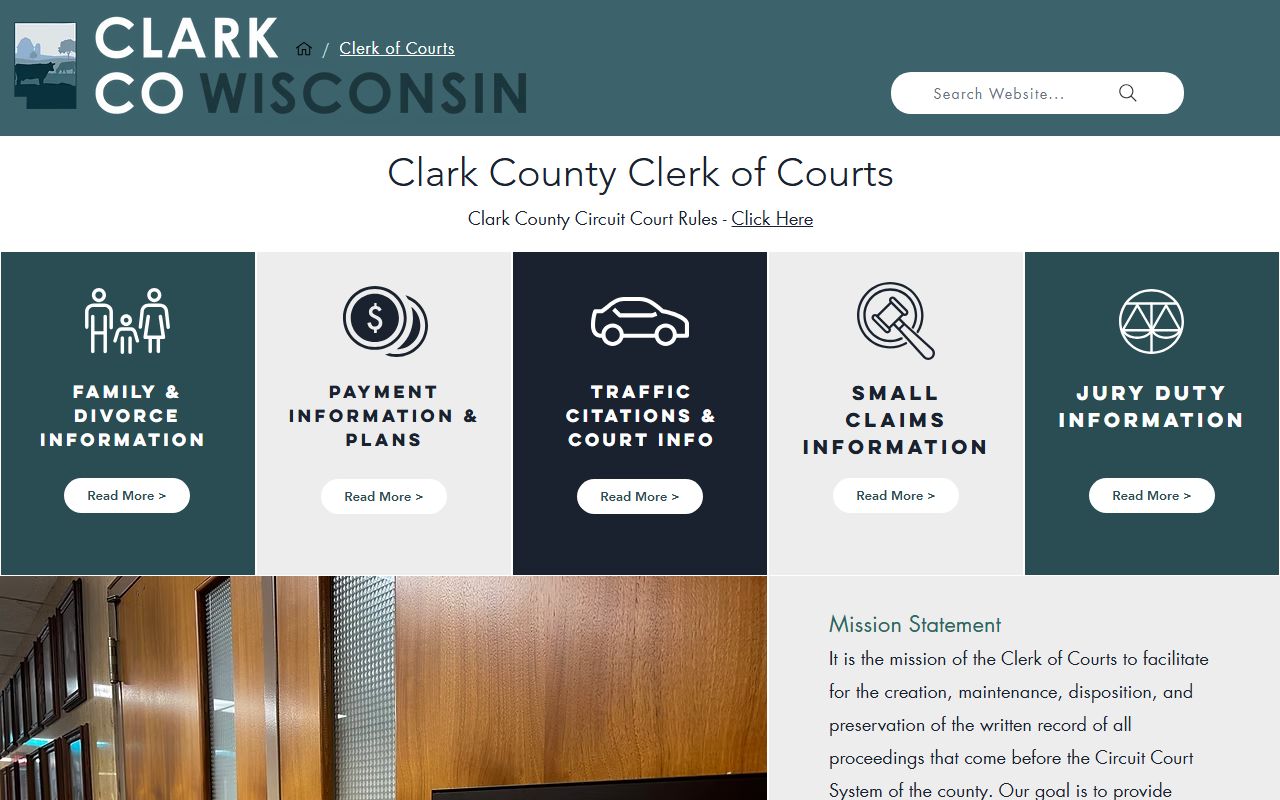
That image points directly to the office that can issue copies and explain the local record request process.
How Clark County DUI Records Search Works
Wisconsin Circuit Court Access is the first stop for a Clark County DUI search. The system provides free public access to case summaries, docket entries, and party information for cases filed in Clark County. You can search by name or case number. That gives you the case type, status, and history without making a phone call or driving to Neillsville first.
WCCA is fast, but it is not the whole file. It does not show full documents, and it does not replace the clerk of courts office when you need certified copies. That is especially important for DUI matters, where the docket can show the filing and hearing dates, but the actual complaint, judgment, or sentencing papers remain at the courthouse.
The manifest includes the Clark County circuit court image tied to Clark County Circuit Court. It is a good match for the official court side of the search.
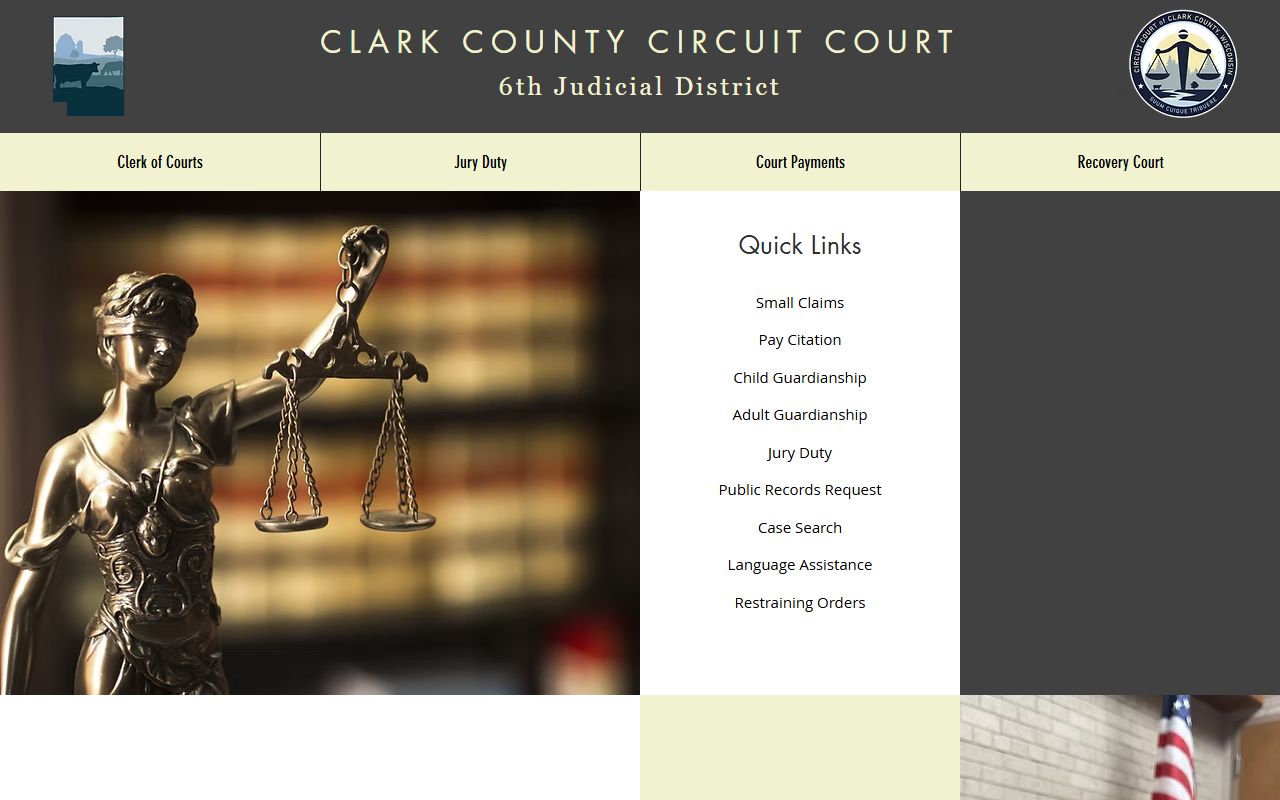
Use WCCA to locate the case, then use the courthouse record to confirm the details. That sequence keeps the search clean and avoids confusion over docket entries versus actual filings.
Clark County Fees and Requests
Clark County follows the state copy fee pattern in the research: $1.25 per page for standard copies and $5.00 per certified copy. If you need a mailing copy, the clerk can tell you what to send and where to send it. A record request that names the party clearly and gives a case number, if you have one, will usually move faster than a broad search request.
Fees matter because a DUI record often needs to be used somewhere else. A driver may need the certified copy for the DOT, a lawyer may need it for a file review, or a family member may need it to understand the case history. In each situation, the Clark County Clerk of Courts is the office that can prepare the official copy.
The manifest includes the Clark County sheriff records image tied to Clark County Sheriff Records. That page is useful when the record question starts on the law-enforcement side instead of the court side.
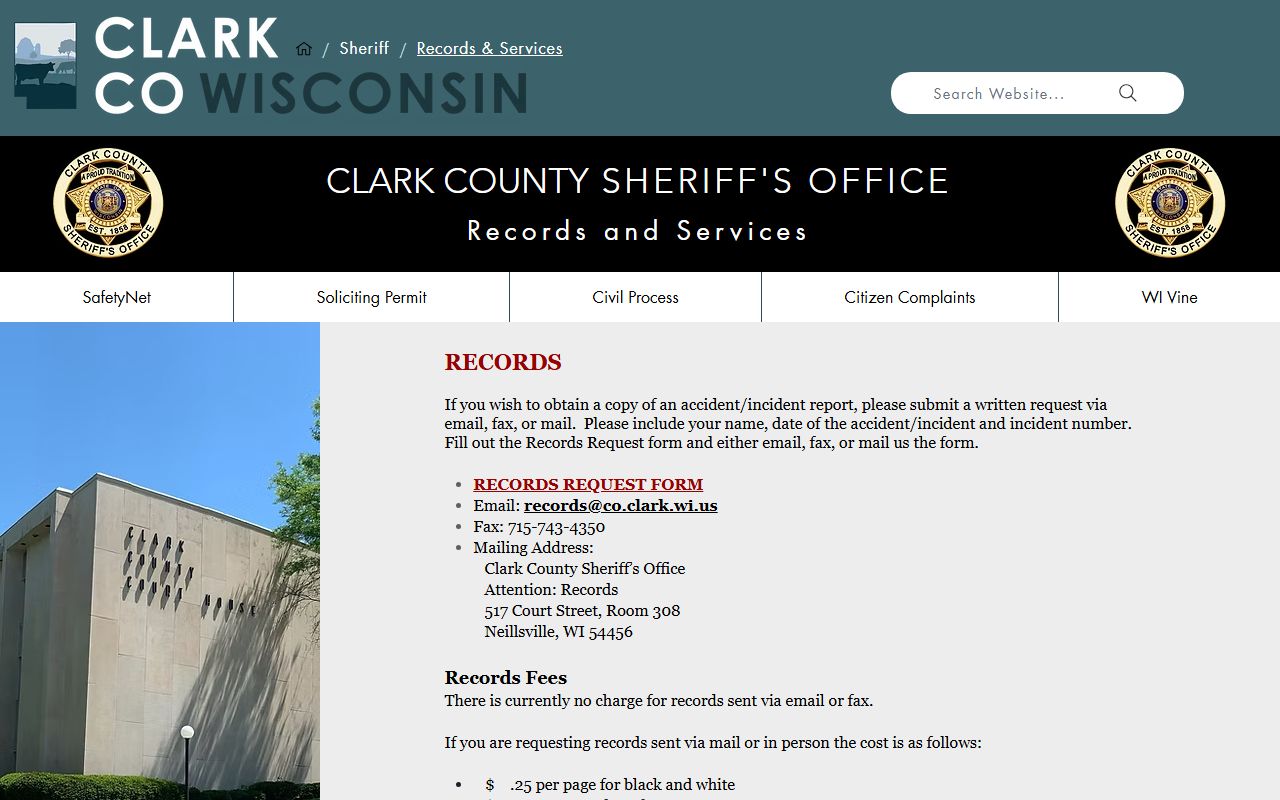
That image belongs in the Clark County record trail because arrest and incident records can clarify how the DUI case began, even though they are separate from the circuit court file.
Clark County Offices and Help
Clark County's court system gives you several local contact points. The Circuit Court is at 517 Court Street, Fourth Floor, Neillsville, WI 54456, and it handles OWI cases along with the rest of the criminal calendar. The Sheriff's Office maintains incident reports, arrest records, and jail bookings. The court also offers a public records request form for documents that are not already in WCCA. Those offices work together, but they serve different parts of the record trail.
County help also comes from the state law library and the court system's self-help pages. The Wisconsin State Law Library Clark County page points to the local court, sheriff, probate, and district attorney contacts. The eCourts portal is useful when a case turns into a filing or forms question. Neither replaces the clerk, but both help you understand the process around the record.
The county also notes a Recovery Court program, which can matter after repeated impaired-driving contact with the court. That is not a records source by itself, but it tells you that Clark County has a treatment-oriented track alongside the regular criminal process. For a DUI page, that is useful context because it shows how a case may move after the docket is opened.
Clark County record searches also benefit from keeping the county and state systems in the right order. Start with WCCA when you need the case number, move to the clerk when you need the document, and then use the sheriff if the issue is the arrest report or jail side of the file. That sequence cuts out guesswork. It also prevents a common problem in DUI searches, where people ask the clerk for a police report or ask the sheriff for a court judgment. Clark County keeps those functions separate, and the search goes faster when the request matches the office.
Driving Record and OWI Context
Clark County DUI Records often connect to a Wisconsin driving record. The DOT keeps the license history, including suspensions, revocations, traffic violations, and OWI convictions. You can request your own record through WisDOT driving record requests, and third parties can request records with the driver's signed consent. The fee is $5 per record for online or mail requests.
That DOT record matters because it shows the license result after the court case. An OWI conviction or refusal can lead to revocation, an occupational license path, or a reinstatement process. The DOT explains those steps on its OWI suspension page, which is the right companion if you are trying to read the court file and the license file together.
The manifest includes the OWI suspension image tied to WisDOT OWI suspension information. That page covers revocation length, ignition interlock, SR22 insurance, and reinstatement rules.
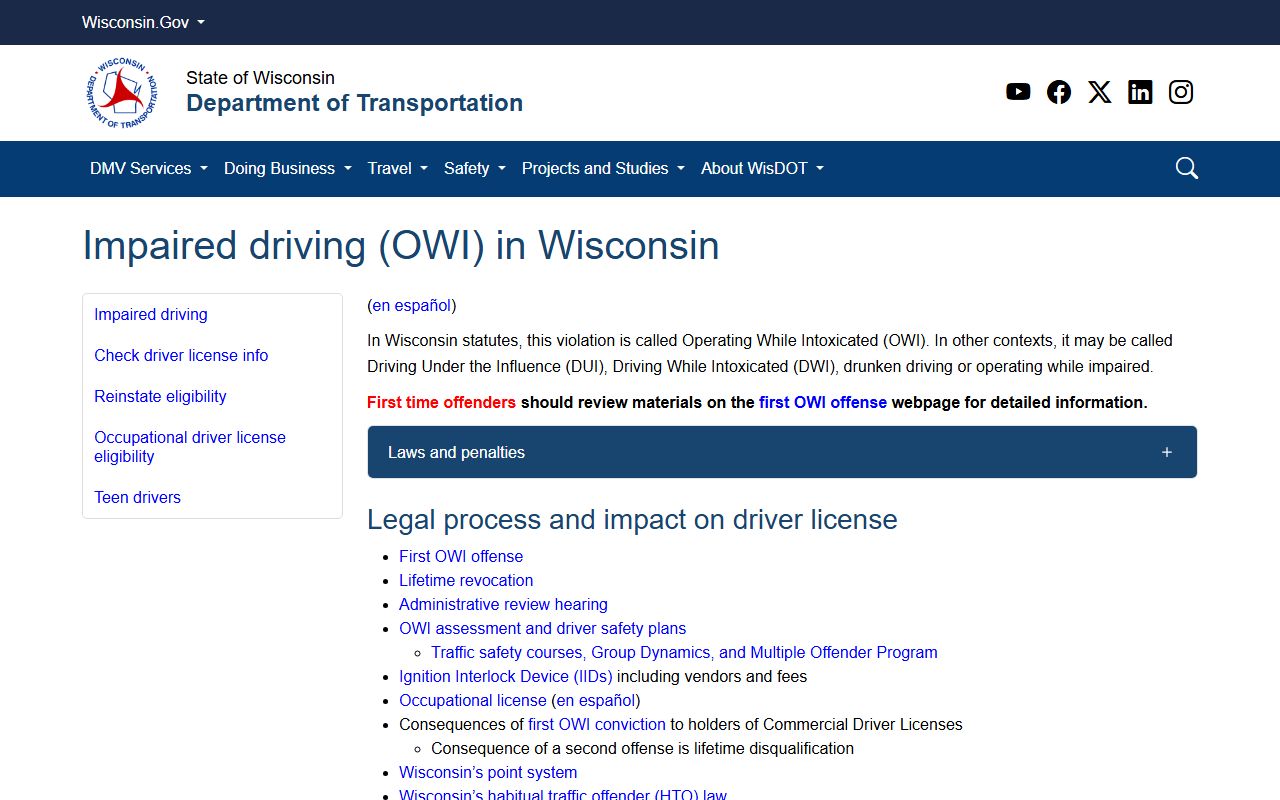
Use the county record to find the case and the DOT page to see the license effect. They tell different parts of the same story.