
Search Iowa County DUI Records
Iowa County DUI Records are easiest to sort when you start with the right office. The clerk of courts keeps the circuit court file, the sheriff handles jail and warrant records, and the district attorney prosecutes OWI cases. WCCA is the quickest way to confirm a case number or check the public docket before you ask for copies. If the matter also touches treatment court, victim services, or a county jail record, the search becomes even more office specific. That is why a focused first step saves time and keeps the record trail clear.
Iowa County Overview
Iowa County Clerk Office
The Iowa County Clerk of Courts can be reached at (608) 935-0395. The office provides court forms for civil, criminal, family, traffic, and ordinance cases, and it manages the county court records for all case types. That makes it the main source for certified copies and the official circuit court file when you need more than a docket summary. The clerk also maintains the Civil Judgment and Lien Docket, which can matter if a DUI matter is tied to a money judgment or other county court business.
The Wisconsin State Law Library's Iowa County resources page is the best local guide for this office. It confirms the clerk's role in court records, jury information, online fee payment, and traffic citation rights and responsibilities for defendants charged with traffic violations, including OWI offenses. That makes the clerk the central point for court records, but not the only place you may need to check if the case also has jail or prosecutor records.
For Iowa County DUI Records, the clerk is also the office that can help if a file is old, a form is missing, or a certified copy is needed for another proceeding. WCCA gives the public view of the case, but the clerk holds the record itself. If you need the actual paper trail, the courthouse remains the place to go.
Here is the Iowa County law library reference page: Iowa County resources.
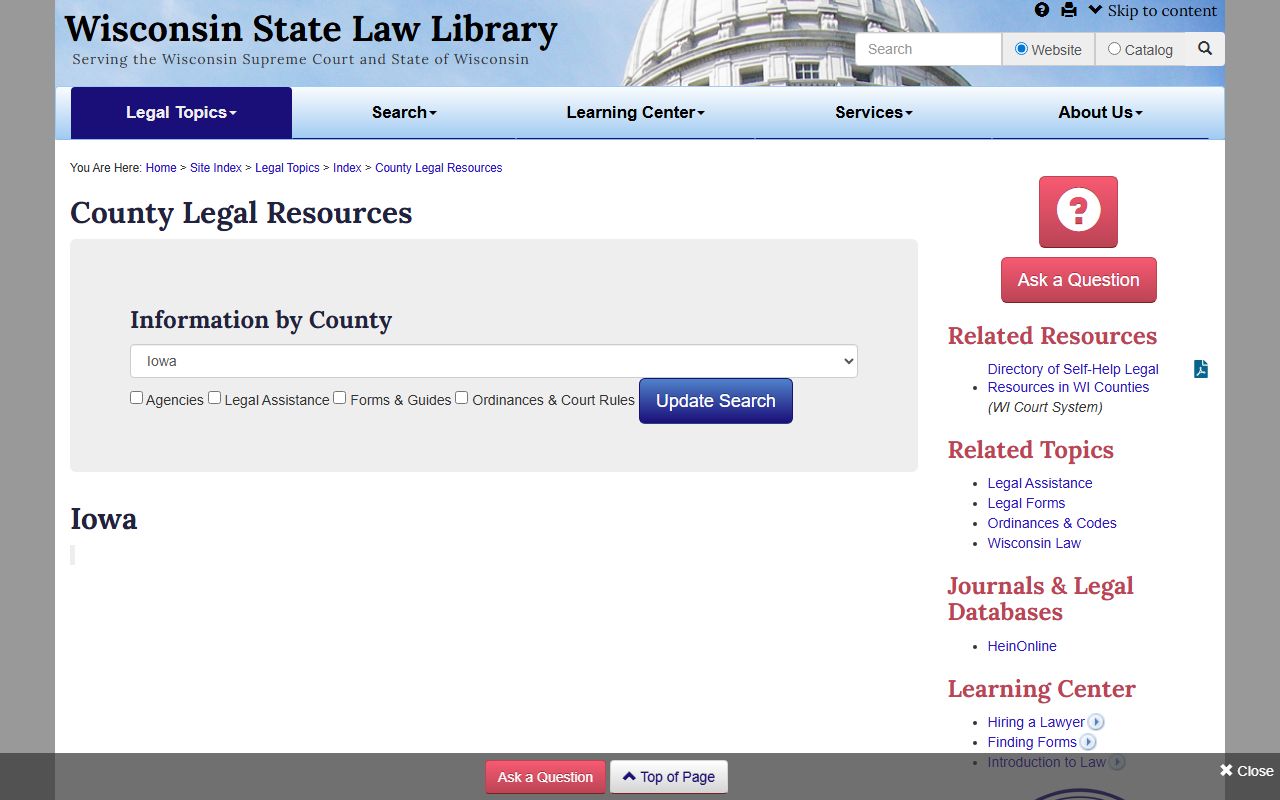
This directory image fits the court record side of the search because it points straight to the county offices that handle Iowa County DUI Records.
How To Search Iowa County DUI Records
WCCA is the fastest place to start because it gives you the public case summary and docket trail. You can search Iowa County cases by party name or case number, then see the case status, appearances, and docket entries. That usually tells you whether the matter is pending, closed, or waiting on another filing. It also helps you confirm the spelling of a name before you ask the clerk for copies.
- Full legal name of the driver or defendant
- Approximate arrest or filing date
- Case number, citation number, or booking number if available
If the record you need is a local arrest report, the Iowa County Sheriff's Department is the other important office. The sheriff can be reached at (608) 935-3314 and handles county law enforcement, jail operations, legal document service, criminal warrants, open records requests, and inmate Huber packets. That makes the sheriff the place to ask for the local record behind the stop, the booking, or the warrant history that may never show in the court docket.
The sheriff side and the court side are not the same. A DUI complaint may show up in WCCA, but the arrest report and jail record stay with the sheriff. If the case has a live booking or a recent warrant issue, the sheriff's records can answer questions that the public docket cannot. Iowa County DUI Records searches are smoother when you keep those roles separate from the start.
For statewide driving history, the Wisconsin DOT driving record request page is the official license history source. If a refusal or conviction affected the license, the DOT's OWI license suspension page explains the revocation side. If the arrest involved a crash, the DOT crash records page is the source for the accident report. Those records are separate from the circuit court file, but they often belong in the same research set.
The county sheriff also keeps open records forms and jail records in accordance with Wisconsin statutes. That is useful when you need a paper trail that starts with a stop and ends with a release. If the case later moves into treatment court or sentencing, the sheriff and the clerk still keep different pieces of the record.
Iowa County DUI Records Fees
The Iowa County research does not list a special DUI copy fee schedule, but it does confirm that the clerk provides online fee payment and manages court records for all case types. That means the clerk is still the office to ask when you need a certified copy or need to know how payment should be made before a record is released. If the file is old or the request is broad, it is smart to confirm payment steps first so the request does not stall.
The county court page on the State Law Library directory also notes that the clerk provides forms for divorce, separation, and payment plan requests, plus traffic citation rights and responsibilities. That is useful context in an OWI case because a traffic matter can bring together the docket, the fine, and the court forms in one place. The clerk can help you reach the right record path, but WCCA still remains the best free way to check the public status first.
For statewide criminal history, the Wisconsin DOJ Crime Information Bureau is the official name-based record source. That is not the same thing as a court copy or a DOT license history. Keeping those three records separate is the safest way to avoid ordering the wrong thing or paying for a duplicate request.
Tip: If you already have the case number, use it. Iowa County requests are much easier when the clerk does not have to search by name alone.
Iowa County OWI Process
Wisconsin's OWI law is found in Wis. Stat. § 346.63. That is the law used in Iowa County DUI prosecutions, and it is the starting point for reading the charge on a docket or complaint. The district attorney prosecutes the criminal case, the clerk keeps the court file, and the sheriff handles the arrest and jail side. Those offices work together, but each one keeps a separate piece of the record trail.
The Iowa County District Attorney can be reached at (608) 935-0393. The office prosecutes criminal cases, including OWI offenses, and provides criminal court information and Victim/Witness services. The Iowa County Victim/Witness Assistance Program can be reached at (608) 935-0338. That matters because a DUI case may involve a witness, a victim, or a county follow-up that does not show up in the court summary alone.
Iowa County also offers a Drug Treatment Court program for eligible defendants. That kind of court path can matter in an OWI case when a defendant is directed into treatment and supervision instead of the usual track. It does not replace the court file, but it can change how the case moves and what the public record looks like over time. If you are reading a docket and see treatment court references, that is part of the county record story.
For legal research, the Wisconsin State Law Library's Drunk Driving Resources page is the best statewide guide. It ties together the criminal law, court forms, and research tools that help explain how an Iowa County OWI case moves. If the case also led to a crash, the DOT crash file can fill in the facts that the public court docket does not show.
Iowa County Records Help
The Iowa County records path is simple once you break it apart. Use WCCA for the docket, the clerk for the court file, the sheriff for jail and warrant records, and the district attorney if you need to understand how the charge was handled. If the case moves into treatment court, that is another county path to keep in mind. The key is not to mix those records together.
Here is the Iowa County law library image source again at Iowa County resources.
This directory image is the only good-quality local manifest asset for Iowa County, and it fits because the county resources page points to the clerk, sheriff, and other legal offices that matter here.
Once you separate the court file from the arrest record and the driver history, Iowa County DUI Records become easier to read and request. That approach also keeps you from asking the wrong office for a record it does not own.